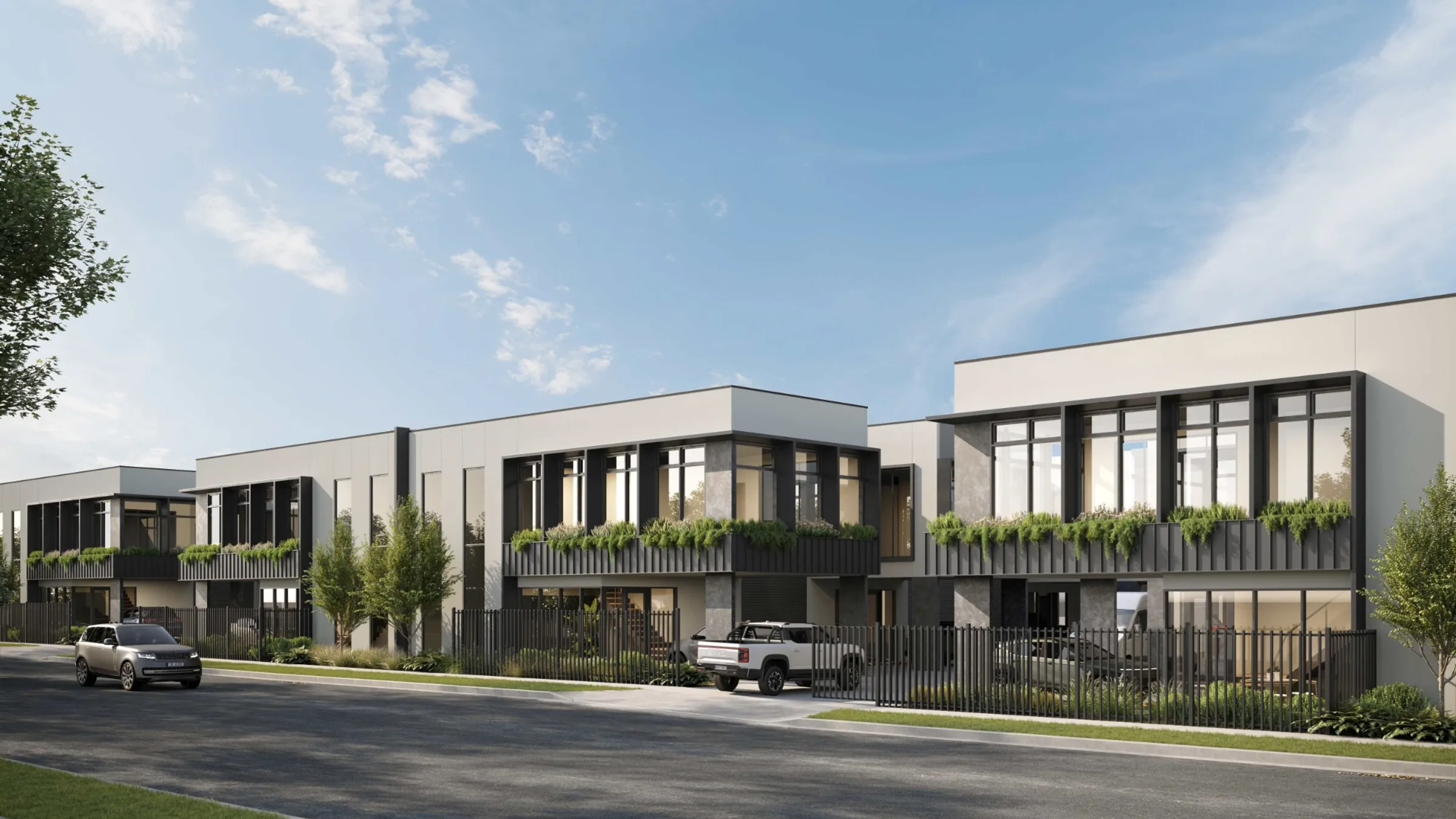
Q&A: Jason Grasso, Spectre Property
From 13 lots in 2020 to around $400 million active: Jason Grasso on sales-led risk, who is buying, how Spectre is funded, and what comes next.
Spectre Property started in 2020 with a 13-lot industrial project. By its own figures at November 2026 the Victorian developer has about $400 million in active projects across eight developments, and about 745 commercial and industrial lots across a portfolio of 11 projects in Victoria and Queensland. The group says those figures are indicative.
Managing director Jason Grasso answered our questions in writing. He covers why sales come first, who is buying lots now, how the platform is funded, why utilities and authorities are the hardest part of delivery, and where the group is headed, including a possible overseas move.
You went from a 13-lot first project in 2020 to around $400m active. What did you get right early that others in industrial don't?
I think one of the most important things we got right early was understanding that successful development isn't simply about acquiring land, building warehouses and selling them.
From the outset, we've placed a strong emphasis on sales, not only as a measure of success but as a fundamental part of managing development risk. Securing sales early provides greater certainty around funding, reduces our exposure and allows us to approach each project with greater confidence.
Equally important has been our focus on the purchaser's journey. We've invested considerable time understanding how purchasers make decisions, what information they need at each stage and how we can make the process of purchasing commercial property as straightforward as possible. It's about anticipating the decisions they need to make and ensuring we're providing the right information, support and confidence throughout that journey.
We've also always placed enormous value on relationships. Whether it's our consultants, contractors, lenders or purchasers, we've built a network of people who understand how we operate and trust us to deliver.
There have also been moments where I've had to back myself. One of our major turning points came when I committed to acquiring a $23 million development site without having the funding secured. I negotiated a longer settlement period and backed my ability to put the transaction together.
That decision carried significant risk, but it also reflected my belief in the opportunity and what we were building.
Ultimately, I think we've combined the willingness to take calculated risks with an increasingly disciplined approach to sales, risk management and delivery. We've never been interested in growth simply for the sake of growth.
We've never been interested in growth simply for the sake of growth.
Jason Grasso
Why commercial and industrial lots, and why Victoria and Queensland rather than NSW?
I've always believed that small and medium-sized businesses are the backbone of the Australian economy. Small businesses alone account for approximately 97% of all actively trading businesses in Australia, and they play an enormous role in employment, innovation and economic growth.
Our focus has been on creating commercial and industrial spaces that cater to these businesses, whether it's a tradesperson looking to establish their first premises or an established business seeking room to expand.
Equally, we recognise the important role private investors play in the commercial property market. Our developments provide opportunities for investors to acquire accessible, individual commercial assets, while also creating premises for businesses that prefer the flexibility of leasing rather than owning.
One of the things I particularly like about this segment is that we're creating opportunities for business owners to own their premises and build long-term wealth, while also providing investors with exposure to an asset class traditionally associated with larger commercial investments.
Victoria is our home market, where we've established strong relationships, local knowledge and a proven track record of delivery.
Queensland was a natural progression as we identified opportunities to bring our approach to development into another growing market.
NSW certainly isn't off the table. We've been deliberate about expanding into markets where we understand the opportunities and can establish a meaningful presence. As we continue to grow, I expect our geographical footprint will expand, but that expansion needs to be commercially justified rather than simply driven by a desire to operate in every state.
Who is buying your lots right now: owner-occupiers, investors or funds? How has that changed in the last 12 months?
Our projects attract a combination of owner-occupiers and private investors, with the balance varying depending on the location, size and type of product we're delivering.
Owner-occupiers continue to be an important part of our market, particularly small and medium-sized businesses looking to establish themselves, expand their operations or transition from leasing to owning their premises.
One of the more interesting shifts we've observed over the past 12 months has been the increasing interest from investors looking to diversify away from traditional residential property. Changes to taxation and investment settings, including recent State and Federal Budget measures, have encouraged investors to reassess their property portfolios and consider the opportunities available in the commercial and industrial sectors.
We've also experienced significant growth in purchasers acquiring properties through self-managed superannuation funds (SMSFs). For these purchasers, smaller commercial and industrial properties can provide an opportunity to acquire a tangible, income-producing asset as part of a longer-term investment strategy.
I think we're seeing a broader shift in how Australians view commercial property. It's increasingly being considered as an alternative to traditional residential investment, rather than an asset class reserved for sophisticated or institutional investors. Smaller commercial and industrial properties are helping make that market more accessible to private investors.
Ultimately, the appeal of our developments is that they cater to a diverse range of purchasers, from business owners seeking their own premises through to private investors and SMSFs looking to diversify their portfolios.
How are you funding the platform's growth, and where does private credit sit in the mix?
Our growth has been supported by a combination of traditional bank funding, non-bank lenders, private capital and joint venture partnerships.
Each of our developments is structured through a separate project entity, allowing us to manage funding, capital and risk independently. This separation is an important part of our risk management strategy, helping to insulate individual projects and minimise the potential for financial difficulties in one development to impact others.
One of the interesting developments as we've grown has been the change in our relationships with lenders.
When you're a relatively new developer, banks and lenders generally impose higher presale requirements and more restrictive lending conditions. While those requirements haven't disappeared, our track record has given financiers greater confidence in our ability to execute.
We're now in a position where banks and lenders actively approach us about funding opportunities, which is a significant change from our earlier years.
Private credit certainly has a place in the market, particularly where flexibility, timing or transaction structure requires something different from traditional bank funding. However, I don't believe one funding source is necessarily better than another. It's about matching the capital to the project and understanding the cost, risk and commercial implications.
As part of our broader vertical integration strategy, we're also currently establishing capital investment opportunities to provide investors with access to our development pipeline. This represents a natural evolution of the business, allowing us to strengthen our capital partnerships and build a more integrated investment and development platform.
Ultimately, our focus is on maintaining a diversified funding strategy that supports sustainable growth without compromising our approach to risk management.
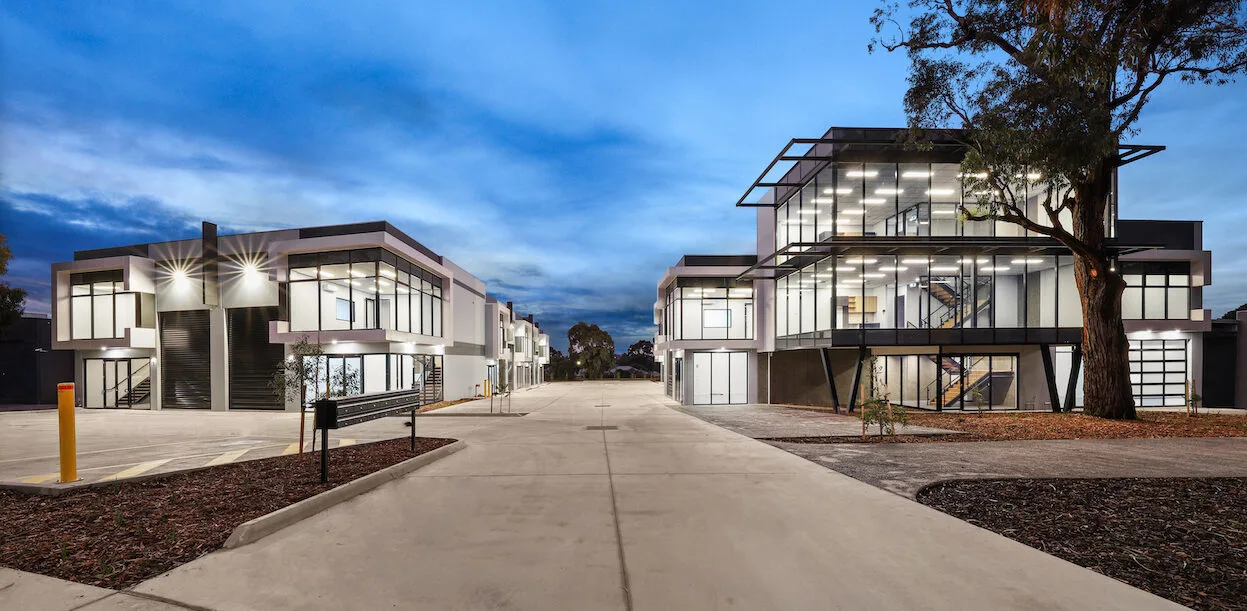
What is the hardest part of delivering industrial subdivisions today: planning, civil costs or utilities?
I think all three present challenges, but increasingly it's the coordination of utilities, authorities and their respective compliance requirements that creates the greatest uncertainty.
Planning is obviously critical, and construction and civil costs require careful management. However, these are generally risks that can be investigated, measured and managed throughout the development process.
Dealing with utilities and authorities can be a different challenge altogether.
The compliance process can be incredibly time-consuming, particularly where multiple authorities have overlapping requirements but each seeks to assess and administer those requirements independently. This can create unnecessary duplication, delays and additional costs, often at a stage where a development is approaching completion and settlement.
One of the fundamental differences is that, unlike construction, developers often have no alternative provider. If a contractor isn't performing or their pricing is uncompetitive, there are generally other suppliers available in the market. With statutory authorities and essential service providers, you're often dealing with a single organisation responsible for the relevant approval or service. There is no practical alternative, regardless of the timeframes, costs or challenges involved.
We've experienced circumstances where we've been required to pay hundreds of thousands of dollars in contributions that we subsequently challenged and ultimately recovered. While we were successful in recovering those funds, the reality is that we still needed the financial capacity to make those payments in the first instance, manage the resulting cash flow implications and dedicate considerable time and resources to challenging the assessments.
I think this highlights an often overlooked aspect of property development. It's not simply about having the financial capacity to acquire land and deliver construction. You also need the experience, resources and financial resilience to navigate complex regulatory processes and challenge decisions where appropriate.
Ultimately, I believe there is significant opportunity for greater coordination and accountability between authorities, particularly where their requirements overlap. A more streamlined approach would reduce unnecessary duplication and improve certainty for developers without compromising the regulatory outcomes those authorities are seeking to achieve.
You talk about "entrepreneurial agility with institutional rigour." What does that look like day to day?
For me, it's about maintaining the ability to make decisions quickly without compromising the discipline required to manage a substantial development business.
I'm often commended on my ability to make decisions quickly. I think that's inherently entrepreneurial. You need to be comfortable making decisions with the information available, moving forward and adapting along the way rather than waiting for everything to be perfect. But when you combine that entrepreneurial mindset with genuine experience, it becomes considerably more powerful.
I'm still personally involved in every facet of the business. There isn't a function within Spectre that I haven't performed myself, and I think that's something people often try to skip when building a business.
You can employ incredibly talented people, and we certainly have, but I believe there's enormous value in having firsthand experience of the roles you're asking others to perform. Without that understanding, it's difficult to know what good performance looks like, challenge assumptions or make the best decisions for the business.
While today I'm no longer personally leading every acquisition or managing every development function, maintaining that connection to the detail remains incredibly important to me.
As we've grown, we've continued to strengthen our internal systems, governance, financial reporting and risk management processes. That structure gives us the confidence to make decisions quickly while maintaining accountability across the business.
Ultimately, I want Spectre to have the discipline and sophistication of a much larger organisation without losing the entrepreneurial agility that enabled us to grow in the first place.
Where do you want Spectre to be in five years?
Over the next five years, my focus is on continuing to build Spectre into a more vertically integrated property group.
We've established a strong foundation in commercial and industrial development, with existing capabilities across development management, project management, superintendent services, sales and marketing. I see considerable opportunity to build on that foundation through further vertical integration, particularly across capital investment, construction and ongoing asset management.
One of the things I'm particularly focused on is creating a business where our involvement doesn't necessarily finish when a property is sold. There are significant opportunities to maintain long-term relationships with purchasers and investors through ongoing asset management, creating value well beyond the initial development and sale.
We're also currently establishing capital investment opportunities as part of this expansion. I see considerable potential in building a more integrated investment and development platform, connecting capital with our development expertise and creating opportunities for investors to participate in our future growth.
I believe there are significant advantages in controlling more of the property lifecycle. It allows us to improve efficiencies, maintain quality, better manage risk and create greater consistency across our projects. That doesn't necessarily mean every division will operate in every market. We'll continue to assess where each capability adds genuine value and make those decisions as the business evolves.
Geographically, I'm certainly open to expanding into additional Australian markets, including NSW. However, what's particularly exciting me at the moment is an opportunity we're exploring in an overseas market. It's still very much in its infancy, but we're taking a close look at the potential and what an international expansion of Spectre could look like.
Ultimately, success in five years won't simply be measured by the value of our pipeline or the number of developments underway.
It will be about having built a sustainable, highly regarded property group with the people, systems, financial capacity and relationships to pursue increasingly significant opportunities, both domestically and potentially internationally.
We've achieved a lot in a relatively short period of time, but I genuinely feel we're still in the early stages of what Spectre can become.
Any figures you're happy for us to publish (projects, lots, pipeline value), as of today?
Based on our current portfolio as at November 2026:
- Approximately $400 million in active projects across eight developments. - Approximately 745 commercial and industrial lots across our broader portfolio of 11 projects in Victoria and Queensland, encompassing developments delivered or progressed. - Approximately $145 million in development value for Found Braeside, our largest individual project. - 13 lots in our first development in 2020.
These figures are indicative and reflect our current development portfolio.
Answers provided in writing.
Photos: Spectre Property.